
The World Cup Is Coming to Your City. Your Security Posture Has Six Weeks.

By Dr. Tyler Billings — PAG Protection
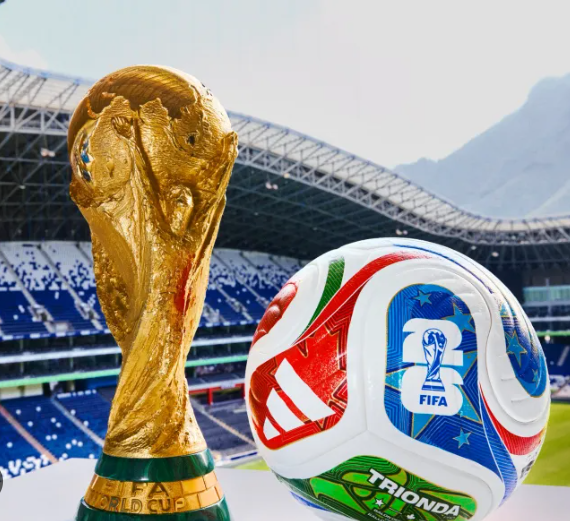
In June, the largest sporting event ever staged on this continent begins. The 2026 FIFA World Cup will run from June 11 through July 19 across sixteen host cities in the United States, Canada, and Mexico — 48 teams, 104 matches, and an expected six million spectators on the ground, with billions more watching globally.
For the eleven U.S. host cities — Atlanta, Boston, Dallas, Houston, Kansas City, Los Angeles, Miami, New York/New Jersey, Philadelphia, San Francisco Bay Area, and Seattle — this is being framed publicly as an economic windfall. It is. It's also something else: the most complex, distributed, high-profile security operation in modern North American history, unfolding during what most threat analysts already consider the most uncertain geopolitical climate in a generation.
If your business sits in or near one of those metros — and that includes the entire DFW corridor for the matches at AT&T Stadium — the question worth asking right now is not whether the World Cup will affect your security posture. It will. The question is whether you've thought about it yet.
Why this tournament is different
Every major sporting event creates security challenges. This one breaks the pattern in three specific ways.
Scale and geographic distribution. Past World Cups concentrated in single countries with single command structures. The 2026 tournament spans three nations, sixteen cities, multiple jurisdictions, varied legal frameworks, and dozens of federal, state, provincial, and local agencies that have never coordinated at this depth before. The complexity of that coordination — and the inevitable seams between agencies — is itself an exploitable surface.
A heightened threat environment going in. The tournament is arriving at a moment of converging pressures: ongoing tensions involving the United States, Israel, and Iran; domestic political volatility; and an information environment that turns minor incidents into national flashpoints within hours. None of this is theoretical. Security analysts have been flagging it for over a year.
Spillover beyond the venue. This is the part most businesses miss. The risks of the World Cup don't begin at the stadium turnstile. They radiate outward — to hotels, restaurants, fan zones, transit hubs, corporate hospitality venues, executive residences, and any property within a meaningful radius of host activities. A business does not have to be inside the security perimeter to be affected by it.
What threats security teams are actually tracking
Public and private threat assessments published this spring are remarkably consistent in what they're focused on:
Protest and demonstration activity. Major sporting events have historically served as platforms for protest, and 2026 is shaping up to be more pronounced than usual. Anti-ICE demonstrations have already been announced for multiple host cities, with workers at SoFi Stadium threatening labor action if federal immigration enforcement is present. Whether or not those specific protests materialize, the broader pattern — large coordinated demonstrations adjacent to high-visibility matches — is essentially guaranteed. Businesses near host venues should expect periodic disruption, traffic interruption, and the possibility of protests evolving in ways that require on-property response.
Lone-actor threats. This remains the most difficult category to predict and the one analysts are most concerned about. The combination of mass attention, soft targets adjacent to hardened venues, and an information environment that amplifies grievance produces a threat profile that conventional security planning does not address well. Lone actors do not need to penetrate the stadium. They need only to find an adjacent location where attention will be paid.
Cyber and digital-physical hybrid attacks. Mobile ticketing, event apps, and digital access control infrastructure represent an expanded attack surface that did not exist at previous tournaments. State-aligned and criminal actors are expected to probe these systems aggressively. The implications extend beyond ticket fraud — successful breaches of access control or surveillance systems have direct physical security consequences.
Crimes of opportunity. Pickpocketing, fraud, vehicle break-ins, and property crime spike around any major event. Visitors unfamiliar with local environments are predictable targets. The hospitality and retail sectors absorb most of this.
Drone activity. Unauthorized drone incursions over and adjacent to venues have become one of the fastest-growing operational concerns in event security. The technology is accessible. The capability ranges from surveillance to disruption to, in rare but possible scenarios, payload delivery. Adjacent businesses with rooftops, parking structures, or open-air operations should know what their response is.
What this means for businesses in host metros
Not every business needs a special operations response. But every business in or near a host city should be making four specific moves in the next six weeks:
1. Reassess perimeter and access protocols. Tournament season is the wrong time to discover gaps. Audit your access control, after-hours protocols, and visitor verification procedures now. Particular attention to the social engineering vectors we've covered in prior posts — the volume of unfamiliar contractors, vendors, and "I'm here for the event" requests will spike, and your front line is the first to see it.
2. Build a protest contingency plan. Specifically: what does your business do if demonstrators gather adjacent to or in front of your property, if traffic is blocked, if employees can't reach the site, if media arrives. This is a planning conversation, not a security conversation. But it has to happen before the moment it's needed.
3. Coordinate with your security partner on intelligence, not just coverage. Hourly coverage tells you nothing about what's about to happen on your block. You need a partner who is actively monitoring the threat environment in your specific metro — protest activity, transportation disruptions, credible threats, ongoing operations — and feeding that into your day-to-day decisions. If your current provider can't, or doesn't, that's a gap worth closing before mid-June.
4. Brief your people. Front desk staff, property managers, executives, even employees commuting to work. Awareness of the elevated environment, willingness to report unusual activity, and a clear understanding of who to escalate to are the cheapest and most effective security upgrades available to you.
The Bottom Line
The World Cup is going to be, for tens of millions of people, an extraordinary experience — a moment of joy, unity, and global celebration. We want that for everyone involved.
We also recognize that a tournament of this scale, unfolding across this geography, under these conditions, is the most demanding security environment of our lifetime. The organizations that come through it intact will be the ones that recognized the moment for what it was and prepared for it.
If you operate in DFW, Houston, or anywhere within the orbit of a host city — and that means most of Texas, given the scale of the Dallas-area matches — the time to have this conversation is now. Not in late May. Not the week of opening match. Now.


Comments